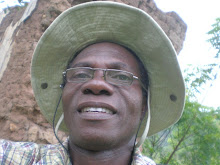
I am with a group of Ghanaian journalists at the US Embassy at a seminar on Web2.0.
Quite interesting. But I cannot add photos because cameras are not allowed.
Attending the seminar with a colleague from GBC is Abigail Larbi. She is being helped to have her first blog. I think i have to be more active on blogging.
Wednesday, June 10, 2009


Friday, March 20, 2009
Obama goes weeding in the White House?

Edem, my son chooses his lettuce for lunch
One of the interesting items I came across on the net today is the news that the family of the U.S.President Obama is to develop a section of the White House into a kitchen garden. The American first family wants eat what it grows. The kitchen garden could be seen by thousands of visitors.
Be on the lookout for Mr Obama next time you are in Washington DC. You might see him weeding in the garden. Maybe he could also see and hear and demonstrators who may not be pleased with the handling of some issues. Demonstrators are are always on the street in front of the White House. Some pitch their tents there for days and even for years! Demonstrations are a good safety valve.
Every member of the Obama family will work in the garden. Working in the garden could take President Obama's mind off the many problems on his desk. Could that be a good relief? It would be more than that.
The BBC reports that the initiative will be welcomed by advocates of the eat local movement such as Kitchen Gardeners International, a coalition of gardeners whose mission is to inspire and teach people to grow their own food.
More than 100,000 people signed the group's online petition urging the Obamas to replant an edible garden at the White House.
The Obamas will not the first to have a vegetable garden in the White House. The report says in 1800 John Adams, the first president to live in the White House, planted a garden.
In the last century, Eleanor Roosevelt planted a Victory Garden during the World War II, while the Clintons had a small rooftop garden that grew vegetables and herbs in the 1990s.
I used to grow my vegetables in my backyard. Quite an enjoyable hobby. One could share with neighbours fresh lettuce. It not very safe to eat lettuce from sources one is not sure of.
The water for watering some vegetables is unsafe. I know a couple of friends who suffered for eating contaminated vegetables. So it is safe to eat what one grows.
There are other advantages of that policy.
Many Ghanaians would not forget 'Operation Feed Yourself 70's. Faced with economic difficulties the then military regime led by General Acheampong made it a policy that every Ghanaian should produce some food.
The benefits of the policy remains a good lesson to date.
But let me tell you why I can't grow lettuce any longer. I have an orange and avocado pear trees. They cast shadow on a small piece of land I have available. An extension made by a former neighbour to his building has almost shielded off completely the sunshine depriving us of enough sunshine for drying clothes.
I have been thinking whether it would not be ideal to have small plot some where not far to grow vegetables. It is impossible to have access to a piece of land at where I live. Sakumono, which used to be outlandish and suburban has become a concrete jungle in less than 15 years.
Would the Russian concept of Datcha work here?(hope I got the spelling of that Russian word correct). During a trip to Russia, the family that a Swiss lady and I stayed with me told me of their lovely farm house outside Moscow. It was unfortunate I did not have time to visit their 'datcha'.
When would city dwellers,landowners, planners and investors think of such agricultural concepts? Investment in chalets outside the city has long become the practice for those who can afford. But not things as Datchas where one could forget the hustle and bustle of city life../ where one could sweat a bit tilling the land at the weekends or free time.
Before I end my piece may I know what became of a programme to assist market gardeners in Accra to have access to safe sources of water to grow vegetables all year round?
Thursday, February 19, 2009
Can Ghana's Hydra-headed Palm tree Survive?

Have you seen the six-headed palm tree yet? I was amazed to see one at Kwamoso in Ghana's Eastern Region. It stands not known to many Ghanaians although it is only less than 40 miles away from the capital city of Accra.
Normally, the oil palm tree does not have branches as other trees. But here is an exception, call it a freak or whatever.
The six headed palm tree is standing on formerly State farm oil palm plantation started in the 1960's by the Kwame Nkrumah government.
Although all other palm trees on the farm have been pulled down because of old age and poor fruit yields, the multi headed palm tree was saved from the hacking tools of the palm wine tapper.Thanks to the experts and the developers of the land who decided to save the tree because of its uniqueness.
During our visit to this one-out-of-many palm tree, a colleague, Frank Addo wondered why Ghanaian botanical and tourist authorities are not helping to preserve it for tourist and research purposes. (Ghana's beautiful Aburi Botanical Garden is about 15 miles away).
Many tourists who visit the Botanical Garden would love to see the hydra-headed palm tree if they are informed about it. The tree is quite accessible and visible from the Accra-Mamfe-Koforidua Raod.
I'm worried that the teak trees planted very close to the multi-headed palm tree could harm it. Teak could be a heavy feeder and the canopy over the palm tree could harm it in the future.
Can the hydra-headed palm tree survive the teak onslaught after the escaping the the mattock and matchets of palm wine tappers?
Would be glad to read of similar 'freaks' in nature.
Friday, January 9, 2009
Great Expectations… is another Ghana possible?
There is much euphoria in the air. Most Ghanaians want change. That is why they voted for a change. Expectations are high.
I remember such expectations eight years ago when the NPP defeated a complacent NDC government.
Shortly after NPP emerged winner in the elections, a huge crowd amid drumming and dancing marched to Mr Kufour’s residence near Spanner Junction now called HIPC Junction, So re-named because of the President’s controversial decision to declare Ghana as a poor and indebted country for the cancellation of her debts.
Is it a repetition of history?.
Let me talk a bit about the jubilant crowd. I did a vox pop for Radio Ghana on the expectations of people from the Kufuor government. When I asked him what his expectations were he simply said ‘I hope the economy under President Kufuor would improve so that I can also marry’.
A senior colleague found that expectation very interesting. And he advised me to playback the vox pop after four years. Well, I would be glad to meet the man and find out how he is faring in his married life. Relatively, didn’t things go well economically?
The sheer number of people who converged on the Independence Square for the swearing into office President John Attah Mills and the Vice President, John Mahama is not because Ghanaians like their new President.
The big crowd shows how ‘elephantine’ Ghana’s problems are and how high expectations are. Thousands of ordinary Ghanaians who voted for change want the new administration make the changes it has promised to bring improvement in their lives. Let me ask this question. Is another Ghana possible?
At the Africa Social Forum in Niger recently I did a vox pop on the theme of the World Social Movement.Forum. That is, ‘Another world is possible’. The social movement in Africa is also saying ‘another Africa is possible’ So, another Ghana is possible.
A South African activist, Ms Mohau Pheko (not pronounced as in photo but as in peck…) at the forum however observed that the state in Africa has failed and there is the need for a change in the way things are done. I’m posting her interview as a podcast on soundbytes.podbean.com
I remember such expectations eight years ago when the NPP defeated a complacent NDC government.
Shortly after NPP emerged winner in the elections, a huge crowd amid drumming and dancing marched to Mr Kufour’s residence near Spanner Junction now called HIPC Junction, So re-named because of the President’s controversial decision to declare Ghana as a poor and indebted country for the cancellation of her debts.
Is it a repetition of history?.
Let me talk a bit about the jubilant crowd. I did a vox pop for Radio Ghana on the expectations of people from the Kufuor government. When I asked him what his expectations were he simply said ‘I hope the economy under President Kufuor would improve so that I can also marry’.
A senior colleague found that expectation very interesting. And he advised me to playback the vox pop after four years. Well, I would be glad to meet the man and find out how he is faring in his married life. Relatively, didn’t things go well economically?
The sheer number of people who converged on the Independence Square for the swearing into office President John Attah Mills and the Vice President, John Mahama is not because Ghanaians like their new President.
The big crowd shows how ‘elephantine’ Ghana’s problems are and how high expectations are. Thousands of ordinary Ghanaians who voted for change want the new administration make the changes it has promised to bring improvement in their lives. Let me ask this question. Is another Ghana possible?
At the Africa Social Forum in Niger recently I did a vox pop on the theme of the World Social Movement.Forum. That is, ‘Another world is possible’. The social movement in Africa is also saying ‘another Africa is possible’ So, another Ghana is possible.
A South African activist, Ms Mohau Pheko (not pronounced as in photo but as in peck…) at the forum however observed that the state in Africa has failed and there is the need for a change in the way things are done. I’m posting her interview as a podcast on soundbytes.podbean.com
Monday, January 5, 2009
The Blind, the Ballot and the Braille...
Even with transparent boxes lot of shaddy deals can occur. In the recent elections in Ghana there was news from Upper West Region that one voter tried to stuff the transparent box with as many as 20 thumb printed ballot papers. This was detected when electoral officials found that the guy was spending too much time in the booth. Before he could be grabbed … away he disappeared into the bush! He is yet to be caught to face the law.
The declaration of Professor Mills as the winner of the Presidential race is no more news. The tension and jubilation are dying down and serious business of running affairs of the nation begins. The incoming government has set up a transitional team to start work.
Both Nana Akufo Addo, the Presidential candidate of the New Patriotic Party and the outgoing President John Kufuor have congratulated Professor Mills on being declared the winner in the in Presidential election. The leaderships of the political parties and stakeholders sound reconciliatory. Thank God words from all over have helped in easing tension that could have exploded in violence.
The post election violence that characterised elections in some African countries of late never took place in Ghana.
From Senegal, I friend wrote, ‘congrats, Ghana has taught the rest of Africa something good’.
Election is not the main thrust of my post today. But allow me to go back to the improvements being made in the electoral process in Ghana… from the wooden ballot box to the transparent one.
Among the voters were a small group of people. The blind. There were tactile ballot papers for them to help them choose their representatives and leaders. But as the world marks the 200th anniversary of Louis Braille today, lets find out how the blind in Ghana have been coping with the problem of exercising their franchise.
My mother has just lost her sight. But when my camera flashed she realised it. But the total darkenss she is experiencing is a shock to the family, and to her. She can’t just come to terms with her predicament. She feels sad when friends shed tears for her situation. She is the type who does things for herself. But now she can’t effectively do everything for herself. She could not vote.
But many blind persons including Mr Eleazar Tetteh Plahar voted. I met this man ten plus years ago when I wanted to find more about the problems of the blind . It was well before the Disability Law was passed. I was surprised to see Mr Plahar moving about the whole compound of the Ghana Association of the Blind unaided.
My next interaction with Mr Palahar was at a training workshop at Donkorkrom in the Afram Plains. The training was part of efforts by the Ghana Community Radio Network to involve the blind in producing and broadcasting programmes.
(This reminds me of another blind friend, DJ Jeff . He is a Liberian broadcaster. We met the US while on an International Visitor Programme for some African broadcasters. Jeff flows on the air and enjoys his work. He has lot of courage to push through difficulties. He told me of a software for the blind called Jaw which helps him do a lot on the computer. We exchange emails and skype if possible).
Back to how the blind fared in Ghana’s elections. Mr Plahar told me the process of enabling the disabled to exercise their voting rights started with the coming into force of the 1992 constitution. With the help of some international organisations, tactile ballots were introduced into Ghanaian elections in 2001. They were tried in 2002 in 20 districts in the district Assembly elections. In the 2008 election, tactile ballot papers were available at the 21,000 polling stations.
‘But the process is not yet perfect,’ Mr Plahar complains. He said with tactile ballots the blind could vote secretly and independently. In the last elections, however there were no ‘jackets’ that go with the tactile ballot paper at his polling station. In order not lose his vote he wanted the assistance of the wife in thumb printing against the picture of the candidate of his choice. The electoral officials would not permit him. It took the intervention of senior Electoral official to allow Mr Plahar to be helped. ‘This is my wife, a woman I have confidence in… I did not understand why the officials were objecting to her assistance to me in casting my vote’.
Mr Plahar could not tell me the exact figure of blind people in Ghana. He said conservatively that out of population of 22 million, about one percent are blind. Mr Plahar who was the President of Ghana Association of the Blind, and immediate first Director of the Association thinks there is the need for more training for the blind and electoral officials and volunteers in the use of the tactile ballot papers.
ICT has made life easier for blind people who have access to computers and software. One could readily talk about audio books at audio.com which come with some cost after free trial. ICT or no ICT, Braille is still important.
Who made it possible for millions of blind people to vote, read and write and not banished to the dungeon total darkness?
Louis Braille we are told, in 1821 devised six dot positions arranged in a rectangle containing two columns of three dots each six positions that could be felt with the fingers. The Braille was based on a system developed by Charles Barbier in response to Napoleon’s demand for a code that soldiers could use to communicate silently without light at night called night writing.
The declaration of Professor Mills as the winner of the Presidential race is no more news. The tension and jubilation are dying down and serious business of running affairs of the nation begins. The incoming government has set up a transitional team to start work.
Both Nana Akufo Addo, the Presidential candidate of the New Patriotic Party and the outgoing President John Kufuor have congratulated Professor Mills on being declared the winner in the in Presidential election. The leaderships of the political parties and stakeholders sound reconciliatory. Thank God words from all over have helped in easing tension that could have exploded in violence.
The post election violence that characterised elections in some African countries of late never took place in Ghana.
From Senegal, I friend wrote, ‘congrats, Ghana has taught the rest of Africa something good’.
Election is not the main thrust of my post today. But allow me to go back to the improvements being made in the electoral process in Ghana… from the wooden ballot box to the transparent one.
Among the voters were a small group of people. The blind. There were tactile ballot papers for them to help them choose their representatives and leaders. But as the world marks the 200th anniversary of Louis Braille today, lets find out how the blind in Ghana have been coping with the problem of exercising their franchise.
My mother has just lost her sight. But when my camera flashed she realised it. But the total darkenss she is experiencing is a shock to the family, and to her. She can’t just come to terms with her predicament. She feels sad when friends shed tears for her situation. She is the type who does things for herself. But now she can’t effectively do everything for herself. She could not vote.
But many blind persons including Mr Eleazar Tetteh Plahar voted. I met this man ten plus years ago when I wanted to find more about the problems of the blind . It was well before the Disability Law was passed. I was surprised to see Mr Plahar moving about the whole compound of the Ghana Association of the Blind unaided.
My next interaction with Mr Palahar was at a training workshop at Donkorkrom in the Afram Plains. The training was part of efforts by the Ghana Community Radio Network to involve the blind in producing and broadcasting programmes.
(This reminds me of another blind friend, DJ Jeff . He is a Liberian broadcaster. We met the US while on an International Visitor Programme for some African broadcasters. Jeff flows on the air and enjoys his work. He has lot of courage to push through difficulties. He told me of a software for the blind called Jaw which helps him do a lot on the computer. We exchange emails and skype if possible).
Back to how the blind fared in Ghana’s elections. Mr Plahar told me the process of enabling the disabled to exercise their voting rights started with the coming into force of the 1992 constitution. With the help of some international organisations, tactile ballots were introduced into Ghanaian elections in 2001. They were tried in 2002 in 20 districts in the district Assembly elections. In the 2008 election, tactile ballot papers were available at the 21,000 polling stations.
‘But the process is not yet perfect,’ Mr Plahar complains. He said with tactile ballots the blind could vote secretly and independently. In the last elections, however there were no ‘jackets’ that go with the tactile ballot paper at his polling station. In order not lose his vote he wanted the assistance of the wife in thumb printing against the picture of the candidate of his choice. The electoral officials would not permit him. It took the intervention of senior Electoral official to allow Mr Plahar to be helped. ‘This is my wife, a woman I have confidence in… I did not understand why the officials were objecting to her assistance to me in casting my vote’.
Mr Plahar could not tell me the exact figure of blind people in Ghana. He said conservatively that out of population of 22 million, about one percent are blind. Mr Plahar who was the President of Ghana Association of the Blind, and immediate first Director of the Association thinks there is the need for more training for the blind and electoral officials and volunteers in the use of the tactile ballot papers.
ICT has made life easier for blind people who have access to computers and software. One could readily talk about audio books at audio.com which come with some cost after free trial. ICT or no ICT, Braille is still important.
Who made it possible for millions of blind people to vote, read and write and not banished to the dungeon total darkness?
Louis Braille we are told, in 1821 devised six dot positions arranged in a rectangle containing two columns of three dots each six positions that could be felt with the fingers. The Braille was based on a system developed by Charles Barbier in response to Napoleon’s demand for a code that soldiers could use to communicate silently without light at night called night writing.
Thursday, January 1, 2009
Tain, tripwires, twitters, towel,and Taylor's twangs!!
Woke up to blog today's famous Tain run-off, described as the factor that will determine the winner of the presidential election in Ghana, Nana Akufo Addo or Prof John Attah Mills. Fifty three registered voters will determine the winner in the postponed run-off. Still there are legal hurdles the Electoral authorities must get over as the two parties, the NDC and the NPP are challenging the voting in the each others strongholds.
Meanwhile appeals are being made for the two parties to accept the results of today's election. CDD, a think tank went further to call on NPP to throw in the towel and not to resort to legal processes that would delay a handover within the constitutionally stipulated time frame.
A preacher man is reported to have referred to the story in the bible about the controversy over the ownership of a baby by two women. One woman wanted the baby cut into two halves and the other wanted to let go the baby. The preacher man felt one party should concede defeat in the interest of the nation. I understand him as implying that whoever compromises would be adding a plus to his political prospects.
News is coming in that the ruling party, the NPP plans to boycott the election in Tain because the atmosphere is not conducive to holding of a peaceful election. Security personnel have blanketed Tain. Not only security personnel, journalists and of course new media users including a resident American Peace Corps twitter, Amos informed me yesterday. The twitter,( or is it twitterer?) confirmed the heavy security presence.
Before starting my blogging this morning, I had to quickly join in a discussion on Africatalks.org about a Ghanaian musician,Uncle Ebo Taylor's new album launched in New York. Not a diversion from politics at all. Read on and see at least how music meets or mixes with politics. But don't be dissappointed with the rather too many questions posed and the typos. Read on, please.
hello,
Doc, it is a pity that i cannot watch most of the numerous videos you have been posting...because of poor internet connectivity.God knows when most Ghanaian internet users would get over these problems.
I must confess I have not watched your piece on Ghanaian Afrobeat Rocks New York. But permit me to make some quick general comments and pose some questions others have already asked.
Let's congratulate Uncle Ebow for his neo traditional Afrobeat album and thank him for his next AfricaNext show.
Why are Ghanaian Stars not making it on the international music scene?.. as Cameroun's Manu Dibango, Yousour Ndour of Senegal? Is it because they are based in Europe?
Is it the type of stuff they play?
Why did Ghanaian Osibisa make it? (I still love their tracks and of course, 'sound of the gong gong'.
Have Ghanaian governments been really promoting music?
Maybe not much, that is why some musicians became politicians with some of them crossing carpet or changing their political costume. They are like other Ghanaians. free to choose,and to associate with. (Musicians played big roles in sending across the message of politicians).Some of he musicians who supported politicians explained that they did so because they felt the policies of the politicians would enhance the music industry. Does the involvement of musicians in politics affect their future?
Sometimes too much lip service is paid to the development of the arts. Do we support musicians well enough?
Pirating milks them dry. What of payola?
The internal wranglings among musician unions is not helping the development of the music industry.
Maybe Uncle Ebow would tell us how he is making it and how the music industry in Ghana can be built upon.
To end this, join me in saying good bye to Ghanaian musical legend, Kofi Ghanaba, the Master Drummer, difficult to understand sometimes. Years ago he decided to hand over some of his collections to Nigerian institution because he felt Ghana had no use for them. He is gone but his works live on.. that is the legacy of good creativity.
Well, latest ... the voting has started in Tain, some voters pleased to be deciding who the next Prez would be and not intimidated at all by the heavy security presence.
Meanwhile appeals are being made for the two parties to accept the results of today's election. CDD, a think tank went further to call on NPP to throw in the towel and not to resort to legal processes that would delay a handover within the constitutionally stipulated time frame.
A preacher man is reported to have referred to the story in the bible about the controversy over the ownership of a baby by two women. One woman wanted the baby cut into two halves and the other wanted to let go the baby. The preacher man felt one party should concede defeat in the interest of the nation. I understand him as implying that whoever compromises would be adding a plus to his political prospects.
News is coming in that the ruling party, the NPP plans to boycott the election in Tain because the atmosphere is not conducive to holding of a peaceful election. Security personnel have blanketed Tain. Not only security personnel, journalists and of course new media users including a resident American Peace Corps twitter, Amos informed me yesterday. The twitter,( or is it twitterer?) confirmed the heavy security presence.
Before starting my blogging this morning, I had to quickly join in a discussion on Africatalks.org about a Ghanaian musician,Uncle Ebo Taylor's new album launched in New York. Not a diversion from politics at all. Read on and see at least how music meets or mixes with politics. But don't be dissappointed with the rather too many questions posed and the typos. Read on, please.
hello,
Doc, it is a pity that i cannot watch most of the numerous videos you have been posting...because of poor internet connectivity.God knows when most Ghanaian internet users would get over these problems.
I must confess I have not watched your piece on Ghanaian Afrobeat Rocks New York. But permit me to make some quick general comments and pose some questions others have already asked.
Let's congratulate Uncle Ebow for his neo traditional Afrobeat album and thank him for his next AfricaNext show.
Why are Ghanaian Stars not making it on the international music scene?.. as Cameroun's Manu Dibango, Yousour Ndour of Senegal? Is it because they are based in Europe?
Is it the type of stuff they play?
Why did Ghanaian Osibisa make it? (I still love their tracks and of course, 'sound of the gong gong'.
Have Ghanaian governments been really promoting music?
Maybe not much, that is why some musicians became politicians with some of them crossing carpet or changing their political costume. They are like other Ghanaians. free to choose,and to associate with. (Musicians played big roles in sending across the message of politicians).Some of he musicians who supported politicians explained that they did so because they felt the policies of the politicians would enhance the music industry. Does the involvement of musicians in politics affect their future?
Sometimes too much lip service is paid to the development of the arts. Do we support musicians well enough?
Pirating milks them dry. What of payola?
The internal wranglings among musician unions is not helping the development of the music industry.
Maybe Uncle Ebow would tell us how he is making it and how the music industry in Ghana can be built upon.
To end this, join me in saying good bye to Ghanaian musical legend, Kofi Ghanaba, the Master Drummer, difficult to understand sometimes. Years ago he decided to hand over some of his collections to Nigerian institution because he felt Ghana had no use for them. He is gone but his works live on.. that is the legacy of good creativity.
Well, latest ... the voting has started in Tain, some voters pleased to be deciding who the next Prez would be and not intimidated at all by the heavy security presence.
Subscribe to:
Posts (Atom)